The Judges on Your August 18 Ballot: Why These Races Matter
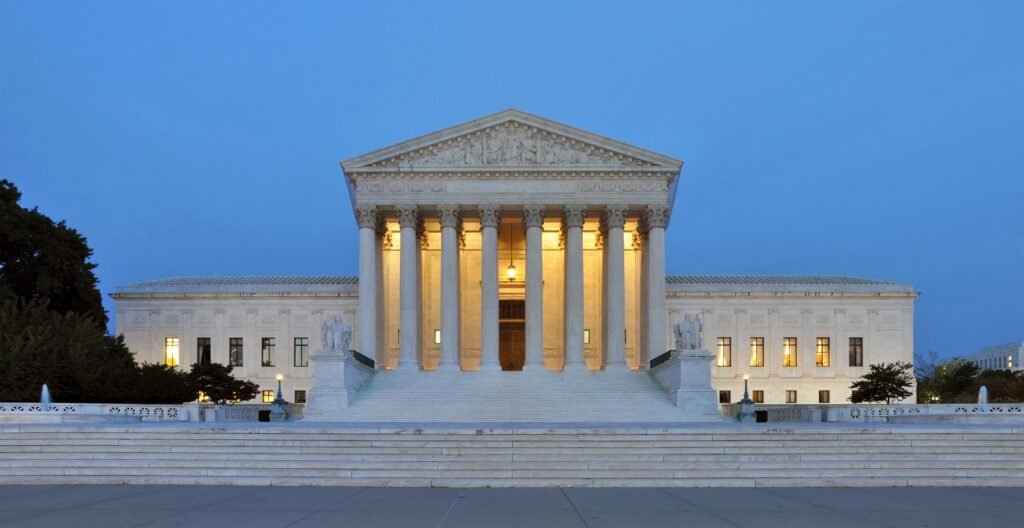
When Miami-Dade voters head to the polls on August 18, some of the most consequential choices on the ballot may also be among the least familiar: judicial elections.
Most voters know the candidates running for mayor, commission or other highly visible offices. Judicial races are different. Candidates cannot campaign in quite the same way politicians do, the races receive considerably less media attention, and many voters arrive at the ballot knowing very little about the names in front of them.
That can make judicial races easy to skip.
But judges hold extraordinary responsibility within our system of government. They make decisions involving families, businesses, property, contracts, criminal cases, personal liberty and disputes between citizens and institutions. Depending on the court and case, a judge may determine whether evidence can be admitted, how a law applies, whether someone remains in custody, how a property dispute is resolved or what happens during some of the most difficult moments in a person’s life.
And unlike many elected officials, judges are expected to exercise that authority independently, impartially and without regard to politics or popularity.
That makes an informed vote especially important.
On August 18, Miami-Dade voters will decide contested races for several Circuit and County Court seats. BNA is not endorsing candidates in this guide. Our goal is to give residents a starting point for understanding who is running, the professional experience each candidate brings and why these races deserve attention.
First, What Does a Circuit Judge Do?
Florida’s Circuit Courts are trial courts that handle many of the state’s most serious and complex cases.
Their jurisdiction can include felony criminal cases, major civil disputes, family law matters, probate and guardianship proceedings, juvenile cases and other matters assigned by Florida law.
Circuit judges therefore encounter an enormous range of people and circumstances. One day may involve a business or property dispute and another a serious criminal proceeding, family conflict or guardianship matter.
The experience, temperament, legal knowledge and judgment of the person sitting on that bench matter.
Here are the candidates appearing in the contested Circuit Court races.
Circuit Judge, Group 5
Alex Annunziato
Alex Annunziato is a South Florida native whose professional background spans law enforcement, military service, criminal defense and civil litigation.
Before his legal career, Annunziato served as a Florida Highway Patrol trooper and lieutenant and as an officer in the U.S. Coast Guard Reserve. As an attorney, he has worked as an assistant public defender and as a civil trial attorney representing both plaintiffs and defendants.
He has also taught as an adjunct professor at the Miami-Dade School of Justice.
His campaign biography highlights pro bono legal representation for immigrants and survivors of domestic violence, as well as his personal experience with addiction and long-term recovery.
Arthur LeMar “Marty” McNeil
Arthur LeMar “Marty” McNeil is an assistant public defender with nearly two decades of legal experience focused primarily on criminal defense and the representation of indigent clients.
McNeil began his legal career at the Miami-Dade Public Defender’s Office and has handled jury trials involving charges ranging from misdemeanors to serious felonies, including homicide cases.
Raised in Fayetteville, North Carolina, by a U.S. Army veteran and an educator, McNeil presents his candidacy as a continuation of a career centered on courtroom advocacy and public service.
Monica Segura
Monica Segura is a Miami-born civil attorney and senior in-house counsel for Universal Property & Casualty Insurance.
Her practice has focused principally on construction, real estate, insurance and premises-liability matters. She earned both her undergraduate and law degrees from the University of Miami and has practiced law in Florida since 2006.
Segura previously served for approximately four years as a special master or magistrate for the Town of Miami Lakes. She has also taught appellate advocacy at St. Thomas University College of Law and held leadership positions in several local bar organizations.
Circuit Judge, Group 35
Renee Gordon
Renee Gordon is a Miami native and assistant public defender with more than 30 years of courtroom experience.
Her career has included thousands of juvenile, misdemeanor, felony and first-appearance cases. She has also worked in private practice in areas including probate, guardianship and personal injury.
Gordon earned her law degree from the University of Connecticut School of Law and has taught as an adjunct professor at Florida International University College of Law. She previously sought election to the bench in 2016 and 2018.
Cristobal David Padron
Cristobal David Padron is a private-practice attorney who has been a member of The Florida Bar since 2011.
His legal experience includes family law, civil and commercial litigation, foreclosure defense, landlord-tenant disputes, probate, criminal matters and appellate work. Family law now comprises a significant portion of his practice.
In his Florida Bar candidate disclosure, Padron reported trying more than 400 bench trials and two jury trials and described experience involving complex custody disputes, domestic violence, jurisdictional matters and child-abduction cases.
Circuit Judge, Group 67
Destiny Alvarez
Destiny Alvarez is a civil and business attorney and managing partner of the Miami office of Goede, DeBoest & Cross.
Her work includes banking law, land use and civil litigation. Alvarez previously practiced at GrayRobinson, served as a Florida Gubernatorial Fellow and completed a judicial externship with the U.S. District Court for the Middle District of Florida.
She earned both her economics degree and Juris Doctor from the University of Florida and was admitted to practice law in Florida in 2020.
Judge Mavel Ruiz
Judge Mavel Ruiz is the incumbent and currently presides over a circuit civil division of the Eleventh Judicial Circuit.
Born in Cuba and raised in Miami-Dade, Ruiz began her legal career as an assistant public defender. She subsequently worked in private practice and with the Office of Regional Conflict Counsel before being elected to the Circuit Court bench in 2014.
Her campaign reports nearly 30 years in the legal profession and more than a decade as a judge, with extensive experience conducting jury trials, bench trials and evidentiary hearings.
Circuit Judge, Group 69
Rita Maria Baez
Rita Maria Baez is a South Florida native who has practiced law since 1996.
She earned her undergraduate degree from the University of Miami and her law degree from St. Thomas University and has operated her own Coral Gables law firm since 2005, focusing substantially on personal injury and civil litigation.
In her Florida Bar candidate statement, Baez reports litigating thousands of cases and serving as counsel in more than 80 jury trials. She previously challenged an incumbent judge in the 2024 election.
Yaneth Del Carmen Baez
Yaneth Del Carmen Baez is a Miami-Dade assistant state attorney with approximately nine years of prosecutorial experience and currently works in the Human Trafficking Unit.
She previously served as chief of the Misdemeanor Domestic Violence Unit, where her responsibilities included training more than 50 prosecutors. Her case experience ranges from misdemeanor battery to homicide and child-trafficking matters.
A graduate of Miami Beach Senior High School, Baez earned her undergraduate degree from Florida International University and her law degree from the University of Akron.
Her campaign reports more than 30 trials to verdict and four nominations by the circuit’s Judicial Nominating Commission.
Bonita Jones-Peabody
Bonita Jones-Peabody is a Miami attorney with approximately 35 years of legal experience.
Her career includes lengthy service as an assistant public defender as well as work as staff counsel or assistant general counsel within the Eleventh Judicial Circuit.
Her legal background spans criminal defense, juvenile law, civil litigation, probate, elder law, landlord-tenant matters and foreclosure. Jones-Peabody has reported handling more than 200 jury trials.
She has also worked in legal and community media and previously ran for Circuit Court judge in 2024.
Circuit Judge, Group 76
Yenly Domínguez
Yenly Domínguez is a Miami-born attorney and founder of the Law Office of Yenly Domínguez in Coral Gables.
With more than seven years of legal experience, her practice includes real-estate transactions and litigation, probate, estate planning, business disputes, foreclosure and first-party property-insurance matters.
Domínguez earned a psychology degree and MBA from Nova Southeastern University and her Juris Doctor from Ave Maria School of Law. She previously interned with the Eleventh Judicial Circuit’s Unified Family Court Division.
Judge Spencer Eig
Judge Spencer Eig is the incumbent and has served on the Eleventh Judicial Circuit bench since his appointment by Governor Jeb Bush in 2005.
Eig earned his undergraduate degree from the University of Virginia and his law degree from the University of Georgia.
Before joining the bench, he worked for the U.S. Department of Justice from 1989 to 1999 and later operated his own law practice. He currently presides over a circuit civil division.
County Judge, Group 25
County Court is different from Circuit Court but can have an equally direct impact on residents’ everyday lives.
Miami-Dade County Court handles a large volume of cases and disputes that can include misdemeanors, traffic matters and civil cases within the jurisdiction established by Florida law.
Two candidates are seeking the Group 25 seat.
Maribel Diaz
Maribel Diaz is a lifelong Miami-Dade resident and attorney with more than 17 years of experience in government and private practice.
Her work has included foreclosure and real-estate law, commercial and consumer collections, property-tax matters, government takings, contract review and procurement.
She currently works in legal services for the Miami-Dade County Tax Collector’s Office.
Diaz has also volunteered with foster children, organized toy drives and mentored young people interested in legal careers.
Judge Luis Perez-Medina
Judge Luis Perez-Medina is the incumbent and has served on the Miami-Dade County Court since his appointment in 2018.
Born in Cuba and raised in Miami, Perez-Medina attended Florida International University College of Law at night while working full-time and graduated first in his evening-division class.
Before joining the bench, he spent nearly 13 years as a prosecutor, including service as a felony division chief and public-corruption prosecutor.
He currently handles a high-volume county civil docket and reports presiding over thousands of hearings and more than 100 bench trials annually.
So How Should You Evaluate a Judicial Candidate?
Judicial elections are different from elections for legislators or commissioners.
A judge isn’t being elected to implement a political platform. Judges are expected to apply the Constitution and law fairly and impartially to the facts and cases before them.
That means voters may want to look beyond familiar political criteria when researching these races.
Consider each candidate’s legal and courtroom experience, the breadth of cases they have handled, their familiarity with the types of matters that come before the court, professional qualifications, judicial temperament and reputation within the legal community.
For incumbent judges, voters can also research their record on the bench. For challengers, voters can examine the depth and nature of their legal practice and the experience they would bring to the judiciary.
Most importantly, don’t make a decision based solely on a familiar-sounding name, a campaign sign or the order in which candidates appear on the ballot.
Don’t Stop Voting When You Reach the Judges
Judicial races may not generate the same headlines as races for mayor, governor or president, but the people elected to these positions exercise substantial authority within our justice system.
For many residents, an encounter with a judge may happen during an extraordinarily consequential moment: a family dispute, a criminal proceeding, a conflict involving a home or business, a probate matter or another legal dispute.
Who sits on the bench matters.
Before August 18, take a few minutes to research the candidates. Read their biographies. Look at their professional histories. Consult nonpartisan voter resources and judicial candidate information. Decide what experience and qualities you believe are most important for someone entrusted with judicial authority.
Then take those choices with you to the ballot box.
Don’t skip the judicial races simply because the names are less familiar. An informed vote for a judge is every bit as much a part of civic participation as a vote for any other elected office.
The election is Tuesday, August 18, 2026. Polls are open from 7:00 a.m. to 7:00 p.m. on Election Day.
BNA encourages every eligible resident to learn about the candidates, review their ballot before Election Day and make an informed choice.