Florida Property Tax Relief Heads to the 2026 Ballot: What Miami and Edgewater Homeowners Should Know
Florida voters will be asked to decide one of the most significant property tax proposals in recent state history during the November 2026 general election.
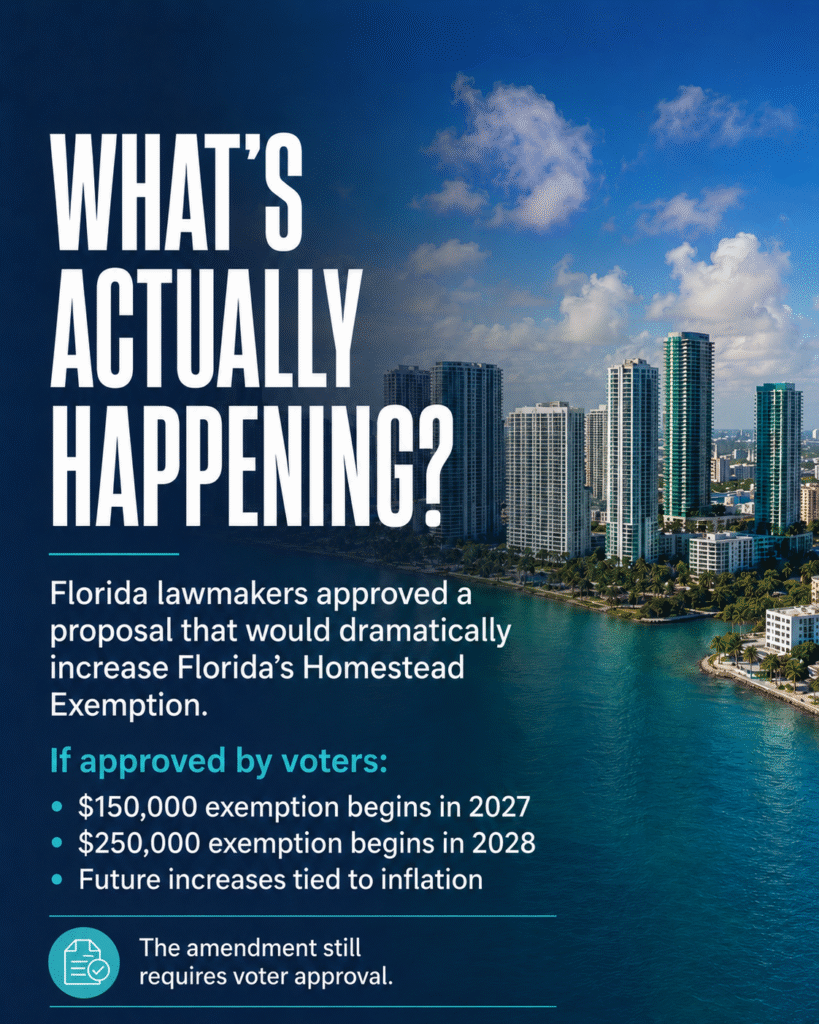
The proposal, approved by the Florida Legislature, would dramatically increase the Homestead Exemption for qualifying Florida homeowners. If approved by voters, the exemption would increase to $150,000 in 2027 and then to $250,000 in 2028, with future increases tied to inflation.
For homeowners in Miami, and especially in neighborhoods like Edgewater where condo values and housing costs have risen sharply, this proposal could have a meaningful impact. But it is important to understand what is being proposed, who may benefit, and what still needs to happen before anything changes.
What Is Actually Being Proposed?
The proposal would create a much larger Homestead Exemption for owner-occupied homestead property in Florida.
If voters approve the constitutional amendment, the exemption would phase in over two years:
$150,000 exemption beginning January 1, 2027
$250,000 exemption beginning January 1, 2028
Future increases adjusted for inflation
The proposal would apply to the non-school portion of property taxes. That distinction matters because school-related property taxes would not be treated the same way under the proposal.
The amendment is not law yet. It must still be approved by Florida voters in November 2026.
Why Is This Happening Now?
Property values across Florida have surged in recent years. For many homeowners, property taxes have become one of the fastest growing housing costs, especially in areas where market values have increased significantly.
Supporters of the proposal argue that homeowners need more meaningful relief as the cost of staying in their homes continues to rise. They see the larger Homestead Exemption as a way to reduce the annual tax burden for Florida residents who own and occupy their homes.
This issue is especially relevant in Miami, where rising property values, insurance costs, association fees, and general cost-of-living pressures are all part of the larger affordability conversation.
What Could This Mean for Edgewater?
Many Edgewater condominium units now have taxable values well above $500,000. A larger Homestead Exemption could reduce annual property tax bills for qualified homeowners by removing a larger portion of a home’s assessed value from taxation.
However, the actual savings would vary from property to property. Factors such as assessed value, taxable value, millage rates, residency status, existing exemptions, and how the final amendment is implemented would all affect the final outcome.
For some homeowners, the impact may be significant. For others, the savings may be more modest.
The key takeaway is this: Edgewater homeowners should pay attention, but they should not assume a specific savings amount until the final ballot language, eligibility rules, and tax calculations are clear.
Who Could Benefit?
Potential beneficiaries may include longtime homeowners, retirees on fixed incomes, families planning to stay in their homes long term, and residents facing rising housing costs.
For homeowners who have lived in Florida for many years and qualify for the Homestead Exemption, the proposal could provide additional protection against rising property tax bills.
That said, property tax policy is complicated. A lower tax bill for one group of property owners can also raise questions about how local governments fund essential services such as public safety, infrastructure, emergency services, parks, and other community needs.
That balance will likely become a major part of the public debate leading up to the November 2026 vote.
What About New Florida Residents?
One of the more debated parts of the proposal involves new Florida residents.
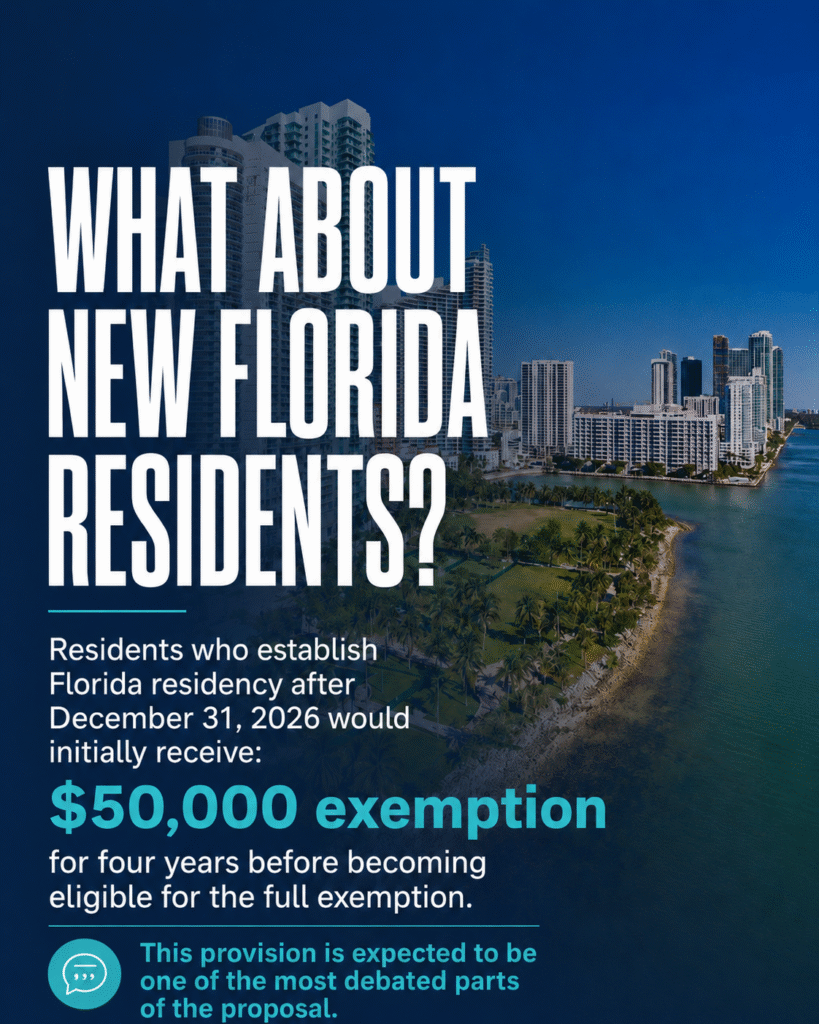
Under the proposal, residents who establish Florida residency after December 31, 2026 would initially receive a $50,000 exemption for four years before becoming eligible for the full exemption.
Supporters may view this as a way to prioritize tax relief for established Florida residents. Critics may question whether it creates a different treatment for new homeowners and recent arrivals.
This provision is expected to receive significant attention as voters begin reviewing the amendment.
The Timeline
The proposal is moving through a multi-step process:
June 2026: The Florida Senate passed the proposal.
Summer 2026: Ballot language is expected to be finalized.
November 2026: Florida voters decide whether to approve the constitutional amendment.
January 2027: If approved, the $150,000 exemption begins.
January 2028: If approved, the exemption increases to $250,000.
Because this is a constitutional amendment, voters will have the final say.
Governor DeSantis Supports the Plan
Governor Ron DeSantis has supported the property tax relief proposal, and state leaders have framed it as a major step toward reducing the cost of homeownership in Florida.
Supporters describe the proposal as one of the largest property tax relief efforts in Florida history. The Florida Senate described the measure as a proposed constitutional amendment creating a $250,000 Homestead Exemption on non-school levies for Florida homeowners.
The proposal now moves from Tallahassee to the voters.
What Happens Next?
Florida voters will decide in November 2026.
If approved, the proposal would begin with a $150,000 exemption in 2027, increase to $250,000 in 2028, and include future inflation adjustments.
For Edgewater residents, this is an important issue to follow. Many of our buildings are made up of homeowners who are directly affected by rising property values, tax bills, insurance costs, and the broader affordability challenges of living in Miami.
As with any major statewide tax proposal, there will be benefits, tradeoffs, and details that deserve close attention.
BNA will continue tracking this issue as the ballot language is finalized and as more information becomes available.