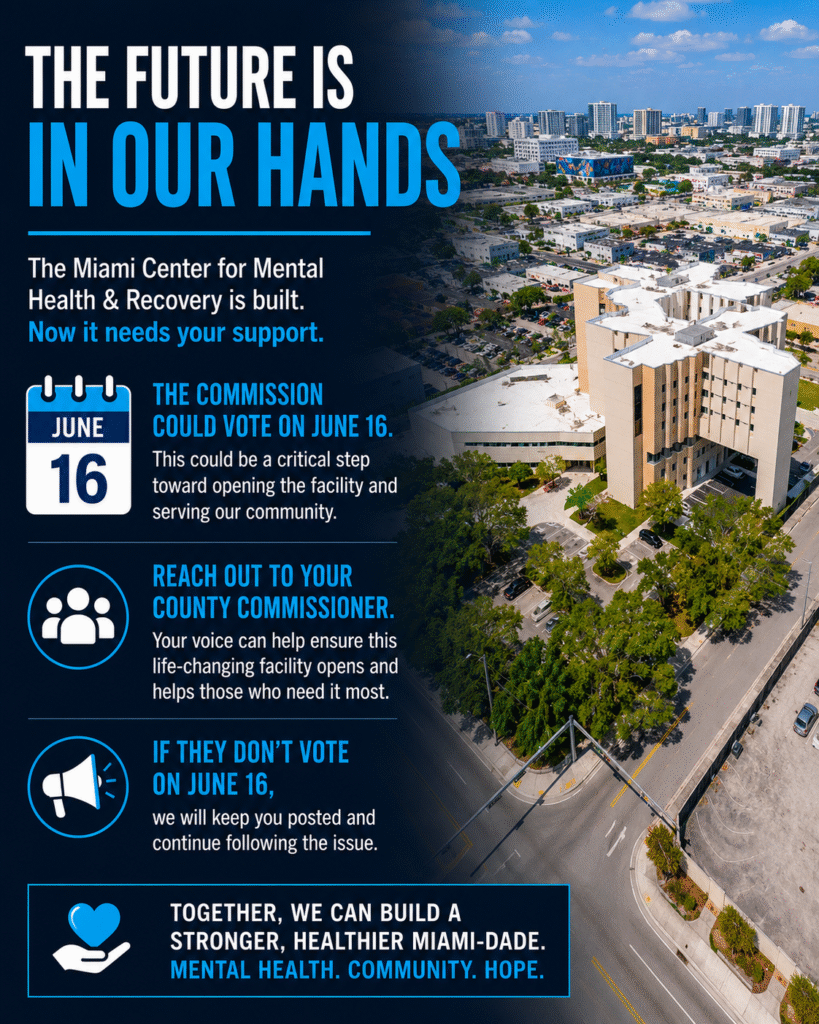
Built, Funded and Waiting: The Debate Over Miami-Dade’s New Mental Health Center
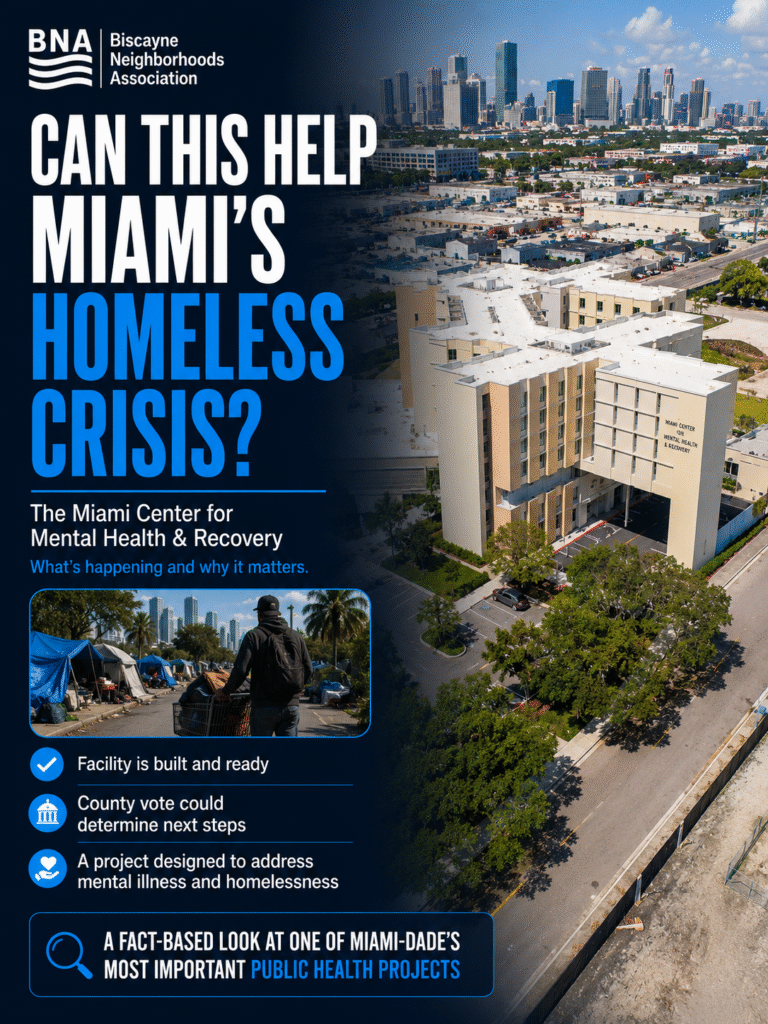
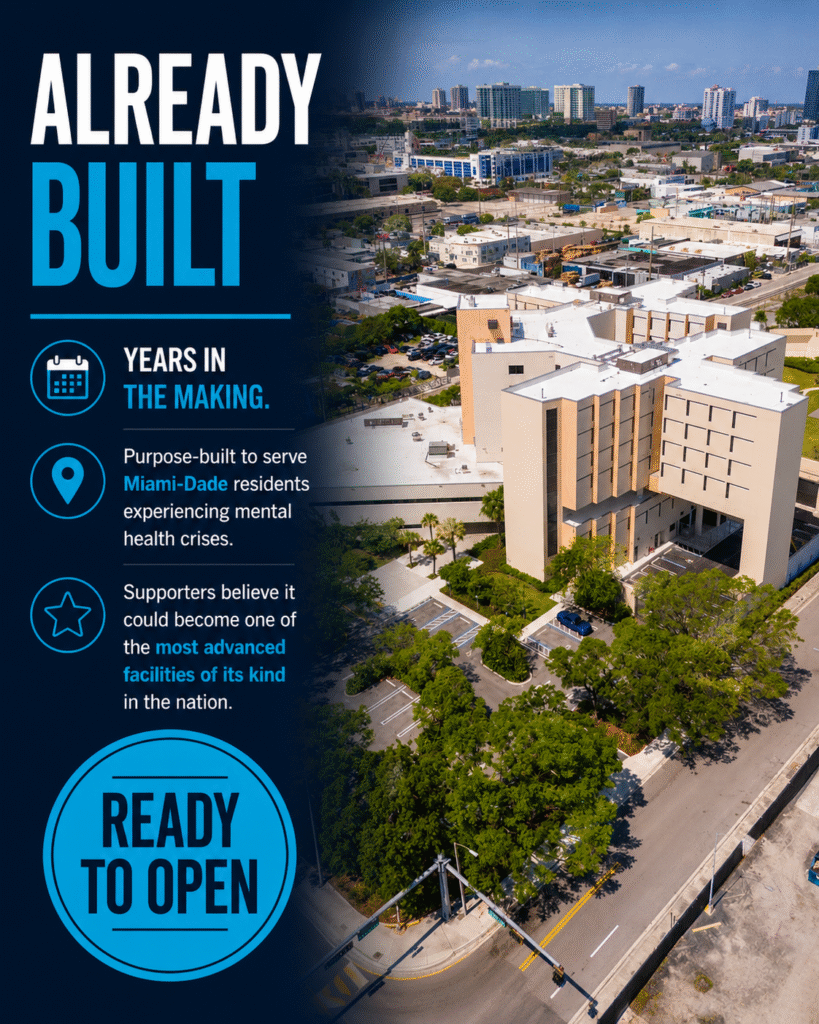
MIAMI — Rising just northwest of downtown Miami, a modern six-story facility sits ready for patients. Landscaped grounds surround the building, treatment spaces have been completed, and county leaders have spent years discussing its potential. Yet despite more than two decades of planning and tens of millions of dollars in public investment, the Miami Center for Mental Health and Recovery remains unopened.
The facility has become the focus of an increasingly public debate over homelessness, public safety, mental illness, and government spending in Miami-Dade County. Supporters view the center as a long-awaited solution to one of the region’s most persistent challenges. Critics and some elected officials argue that important questions about long-term funding and operational oversight must be resolved before the doors are opened.
At the center of the discussion is a broader question that has confronted major American cities for decades: whether governments should continue spending billions responding to the consequences of untreated mental illness or invest more heavily in treatment and recovery services designed to prevent those crises from occurring in the first place.
The origins of the Miami Center for Mental Health and Recovery date back more than twenty years. In 2004, Miami-Dade voters approved General Obligation Bond funding for a mental health diversion facility intended to provide treatment for individuals who frequently cycle through the criminal justice system, emergency rooms, homeless shelters, and crisis stabilization units. Additional county funding followed in subsequent years, while Jackson Health System contributed approximately $8 million toward the project. More recently, federal pandemic recovery funds were allocated to support operational planning.
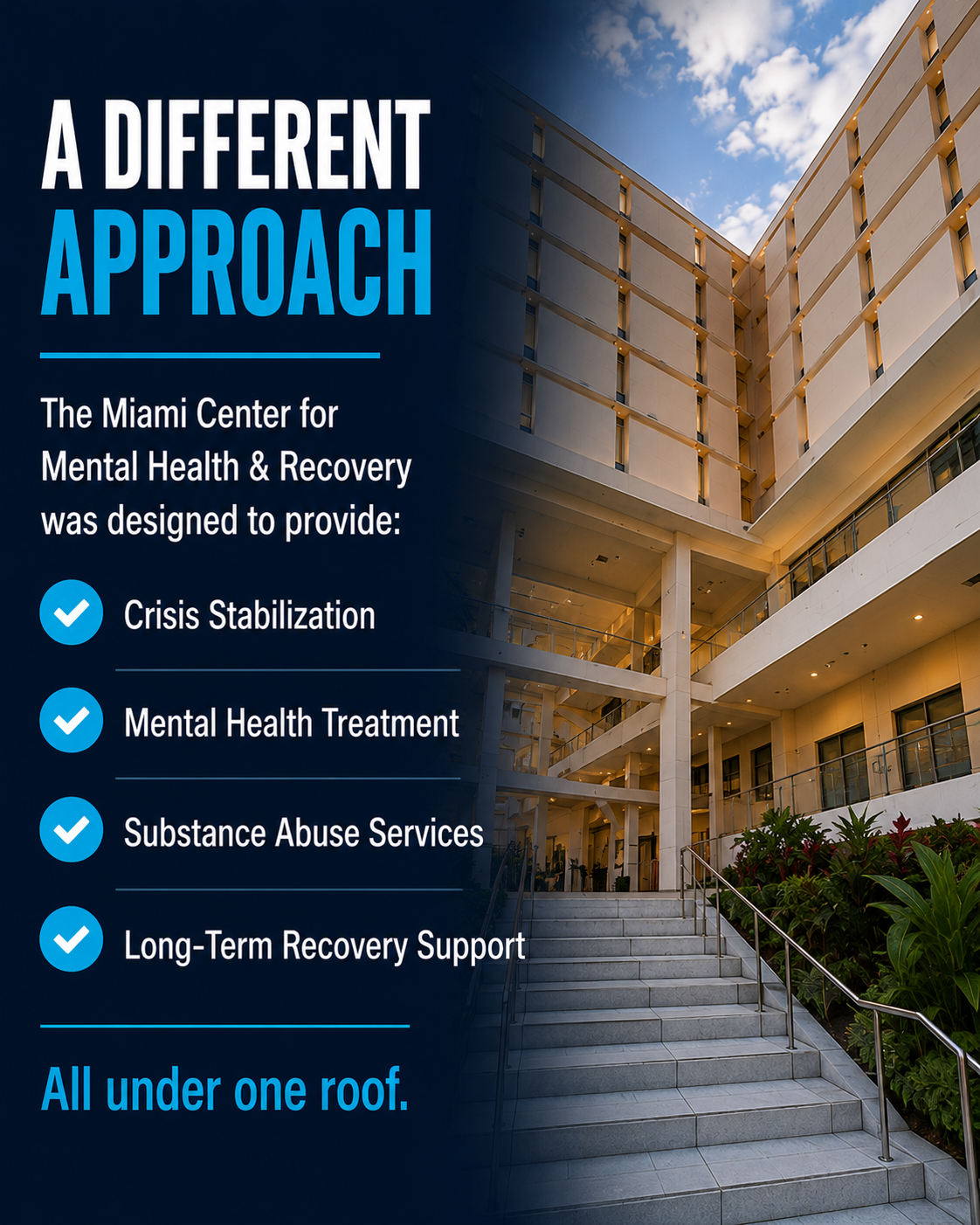
The result is a facility that many mental health advocates believe could become a national model for integrated behavioral healthcare. Unlike a traditional hospital, the center was designed to provide a range of services under one coordinated system, including crisis stabilization, residential treatment, substance use treatment, medication-assisted treatment, care coordination, recovery support, and connections to housing resources.
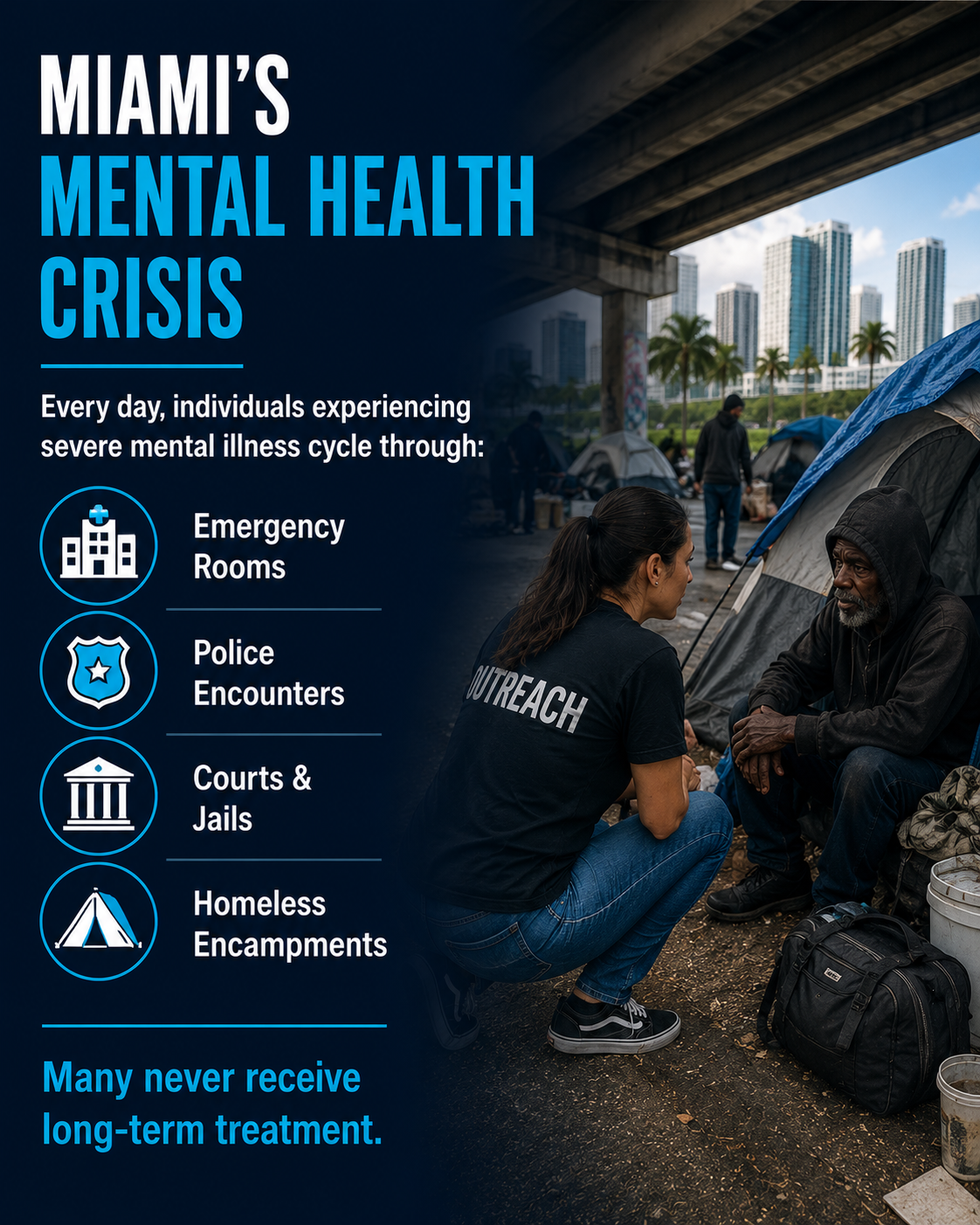
Supporters argue that the facility addresses a population that places extraordinary demands on multiple public systems. Data analyzed by the Eleventh Judicial Circuit Criminal Mental Health Project found that a relatively small group of individuals with severe mental illness account for a disproportionate share of jail bookings, emergency room visits, and homelessness-related interventions throughout Miami-Dade County.
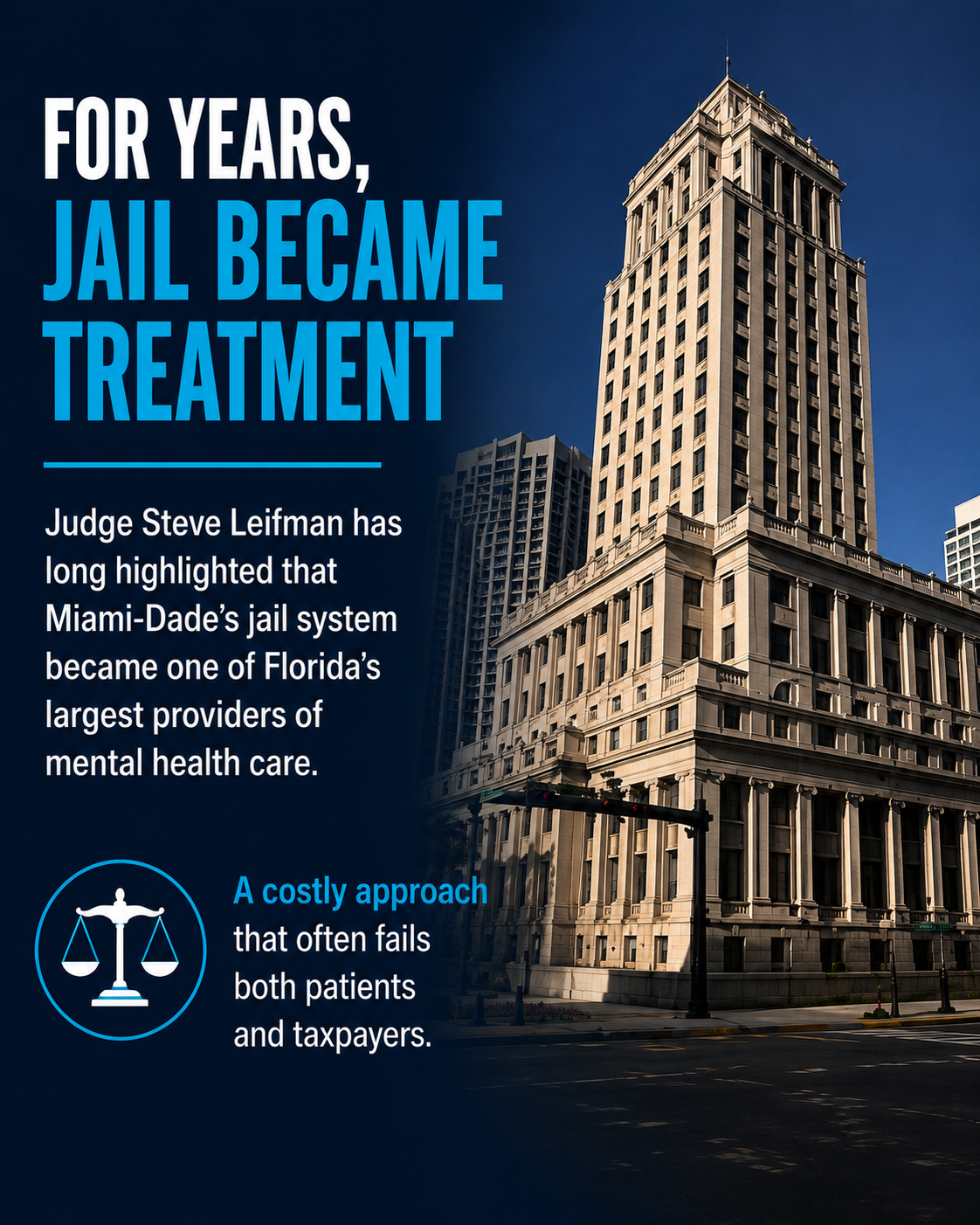
According to publicly cited analyses, approximately three-quarters of Miami-Dade’s jail population has identified mental health treatment needs. In some reporting periods, that figure has exceeded 80 percent. Individuals experiencing untreated mental illness often remain incarcerated longer than other inmates and frequently return to jail after release because the underlying conditions contributing to their arrests have not been adequately addressed.
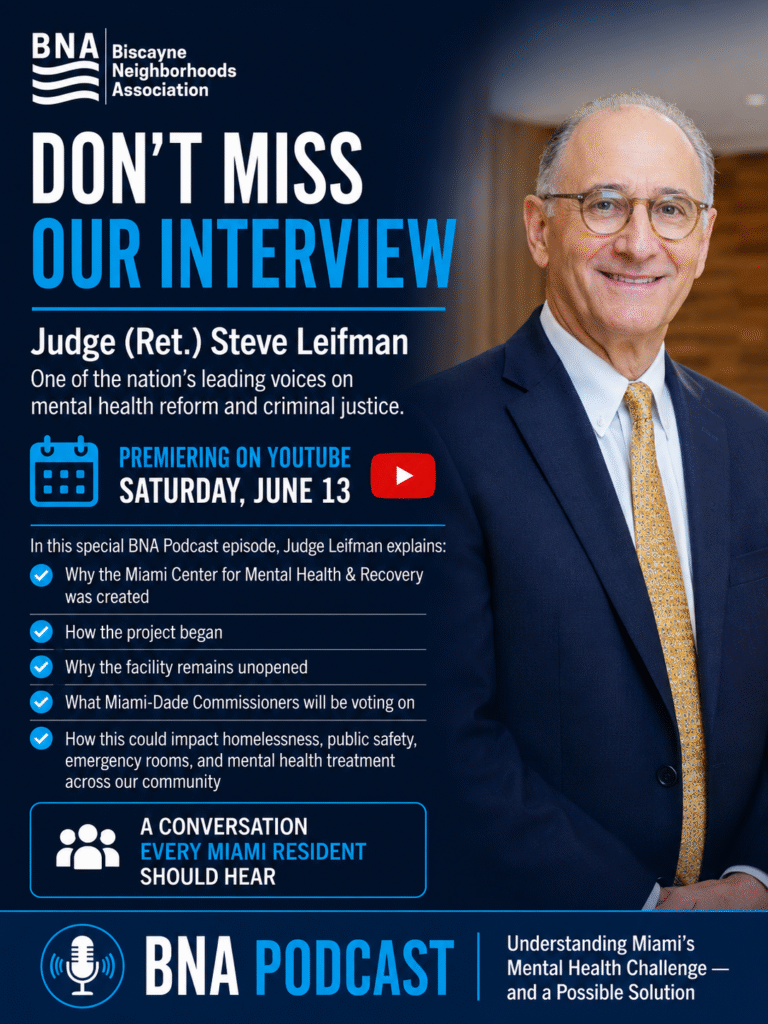
Judge Steven Leifman, who spent decades leading criminal justice and mental health reform efforts in Miami-Dade, has frequently described the situation as a revolving door. Individuals experiencing mental health crises are arrested, incarcerated, released, and eventually find themselves back in the same circumstances, generating repeated costs for taxpayers while rarely achieving long-term stability. Rick Madan, President of the Biscayne Neighborhoods Association recently sat down for an interview with the Judge to learn more about the Center. Watch the full interview on YOU TUBE.
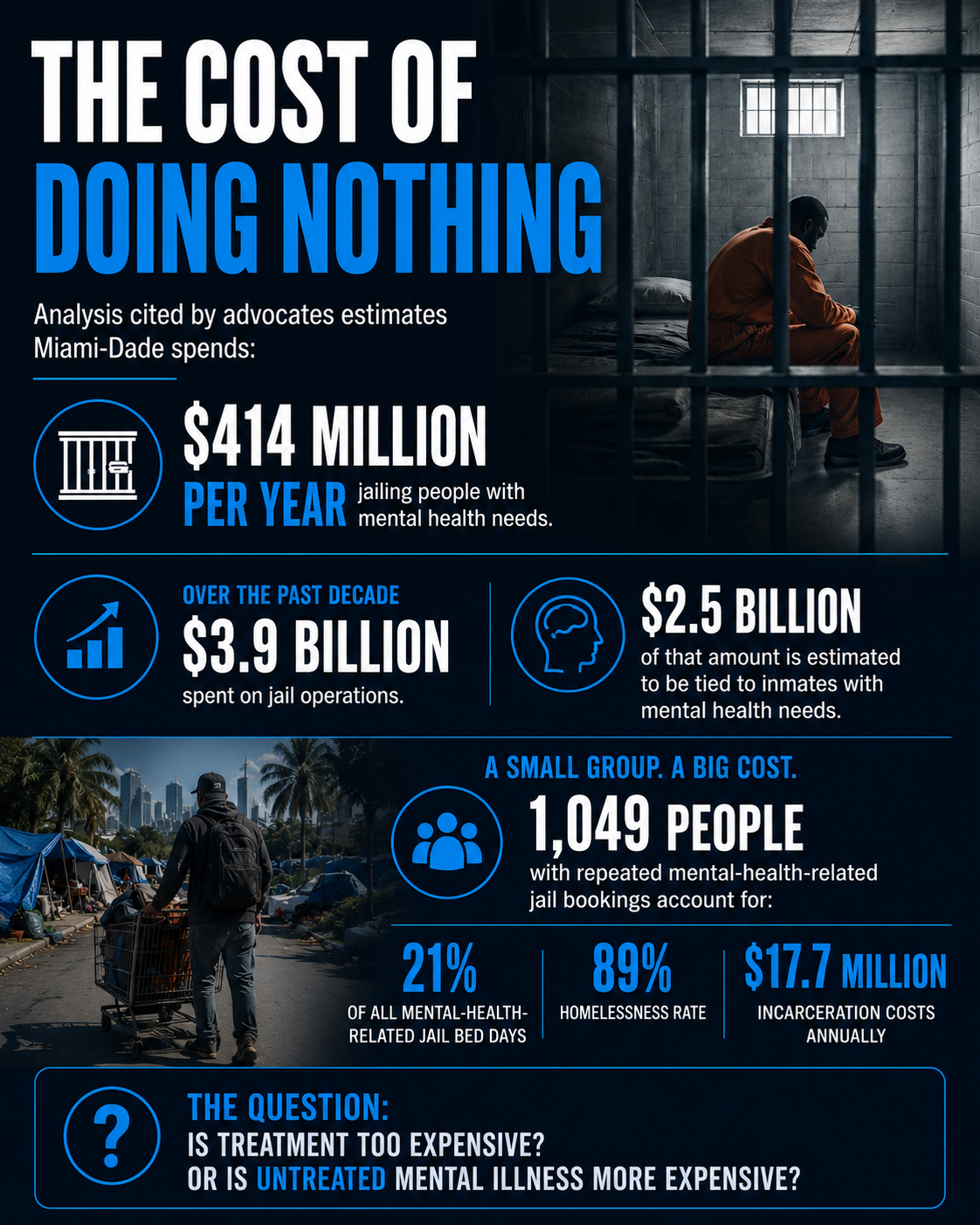
The financial implications have become a central argument in favor of opening the center. Analyses conducted by the Criminal Mental Health Project estimate that Miami-Dade spends approximately $414 million annually incarcerating individuals with mental illnesses. Over the past decade, the county has spent roughly $3.9 billion operating its jail system, with an estimated $2.5 billion attributable to inmates with mental health treatment needs.
A recent opinion article published in the Miami Herald argued that the public conversation has focused too heavily on the projected cost of operating the facility while overlooking the costs already being borne by taxpayers through incarceration, emergency medical services, and crisis response systems. The article cited data indicating that the center’s initial target population of approximately 1,049 individuals generated more than 317,000 jail bed days over a five-year period and more than $117 million in incarceration costs alone.
The same analysis found that nearly 89 percent of those individuals had experienced homelessness.
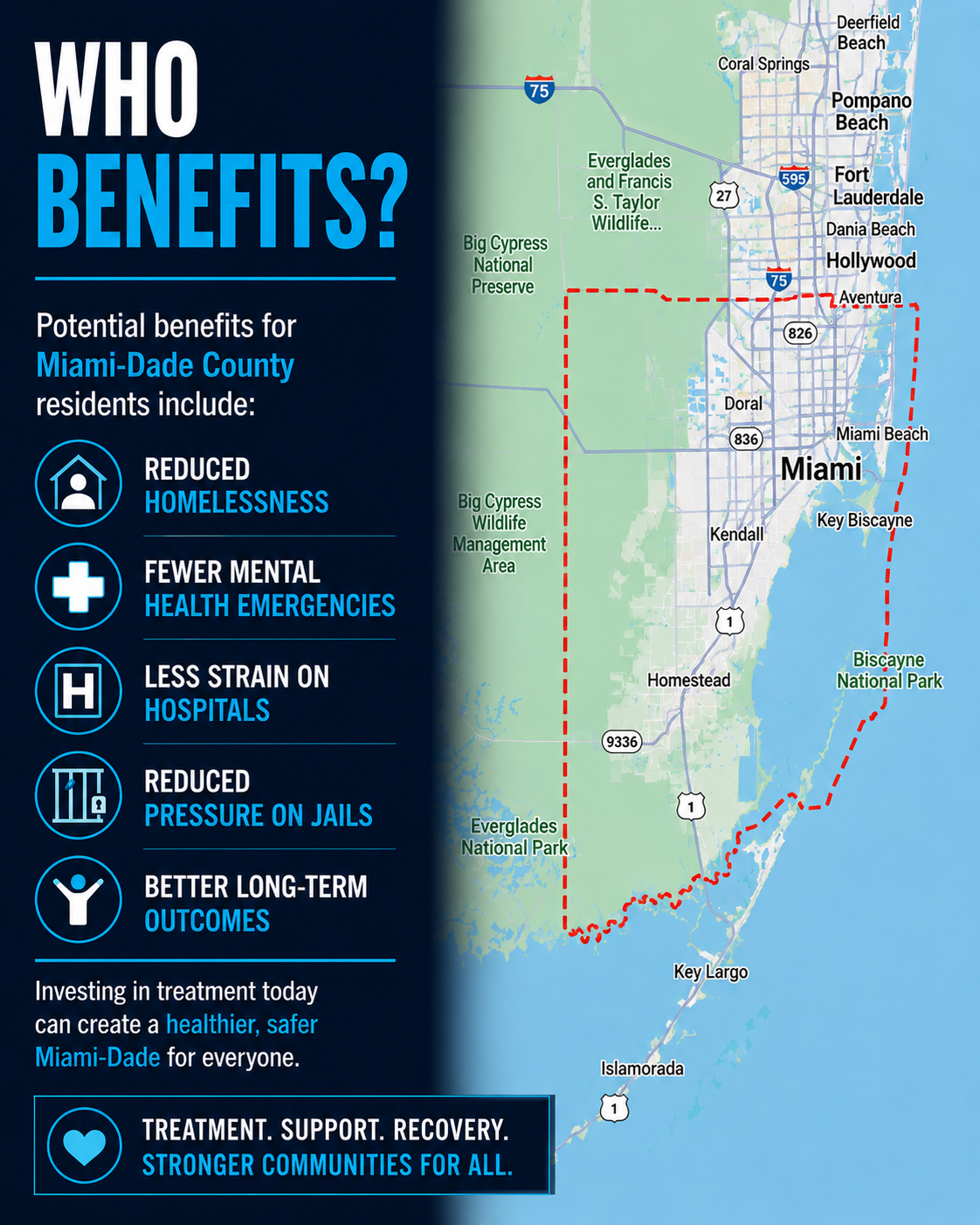
Supporters contend that treating mental illness earlier and more effectively could reduce pressure on jails, hospitals, homeless services, law enforcement agencies, and emergency responders. They argue that the county is already paying for the problem and should now invest in a different approach to addressing it.
The debate has intensified in recent months as county commissioners have repeatedly delayed votes related to operational funding and provider agreements. Some commissioners have expressed concern about the facility’s long-term financial sustainability and requested additional reviews before committing taxpayer dollars.
Questions have also emerged regarding annual operating costs. Some public discussions have referenced figures approaching $30 million per year. Advocates for the project dispute those estimates, citing provider proposals that place annual clinical operating costs at approximately $10.3 million, with an additional $5 million required for building operations and maintenance. They further note that funding would come from multiple sources, including Medicaid reimbursements, state and federal programs, opioid settlement funds, Homeless Trust resources, private philanthropy, and other non-county funding streams.
For supporters, the continued delays are increasingly difficult to understand. They point out that Miami-Dade has spent years studying the issue, constructing the facility, identifying providers, and developing funding strategies. From their perspective, each additional month of delay represents another month in which individuals remain trapped in a costly cycle of homelessness, incarceration, hospitalization, and untreated illness.
County officials, however, maintain that public accountability requires careful scrutiny of large-scale initiatives, particularly those involving long-term operational commitments. Supporters of additional review argue that taxpayers deserve confidence that promised outcomes will be achieved and that funding sources will remain stable over time.
The upcoming discussions before the Miami-Dade County Commission are expected to determine whether the project moves forward or remains in limbo.
What is not disputed is the scale of the challenge the facility was designed to address. Homelessness, mental illness, substance use disorders, and repeated interactions with the criminal justice system continue to affect thousands of residents across Miami-Dade County. The costs are measured not only in dollars but also in human lives, family disruption, public safety concerns, and community well-being.
For now, the Miami Center for Mental Health and Recovery stands as both a symbol of ambition and a reminder of the difficult decisions that accompany major public investments. Whether it ultimately becomes a national model for behavioral health treatment or another unrealized government project may depend on decisions county leaders make in the weeks ahead.