Miami’s Proposed $3.7 Billion Budget: Where the Money Goes and What Residents Should Know
A municipal budget is, at its core, a statement of priorities. The thousands of individual decisions buried inside spreadsheets and departmental accounts eventually answer relatively simple questions: How much will a city spend on police and firefighters? How much will go toward parks, streets and drainage? What will property owners pay? And as Miami continues to grow, how much will it cost simply to keep the city functioning?
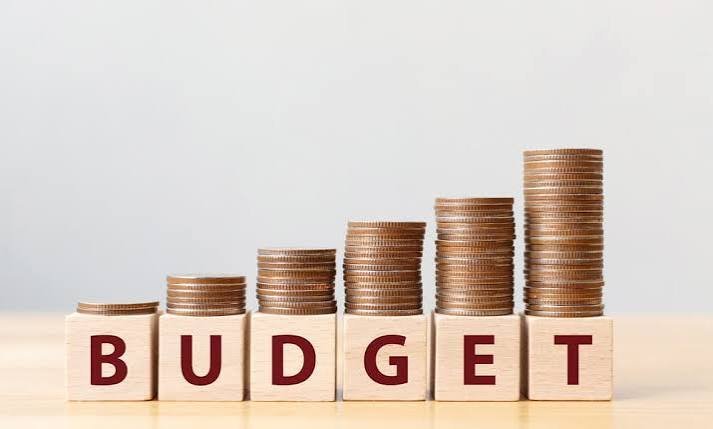
For the fiscal year beginning October 1, 2026, the City of Miami is proposing a budget totaling approximately $3.73 billion, divided almost evenly between day-to-day government operations and longer-term capital investments. The proposed operating budget is $1.862 billion, while the capital component brings the overall proposal to roughly $3.732 billion. The scale is significant, but so is the city it is intended to support. Miami’s population is listed at 489,812 in the budget document, compared with 412,438 in 2011, while the demands placed on infrastructure, public safety, parks and other municipal services have grown alongside it.
For residents trying to understand the proposal, however, the more revealing number may be $1.298 billion. That is the proposed General Fund, the City’s primary operating fund and the part of the budget that pays for many of the services residents encounter most directly. More than half of that money comes from property taxes. The City expects approximately $690.9 million in property-tax revenue, representing 53.2 percent of General Fund revenue. Franchise fees and other taxes account for another $170.6 million, charges for services contribute $162.7 million, and licenses and permits are expected to generate $112.3 million.
Property taxes are staying at the same rate, but that does not necessarily mean the same tax bill
The proposed budget maintains Miami’s total millage rate at 7.3616 mills, the same rate adopted for FY 2025–26. Of that, 7.1080 mills supports general operations and 0.2536 mills supports general-obligation debt. Mayor Eileen Higgins describes it in the budget as the lowest millage rate in 60 years.
Holding the rate flat is different from holding an individual property’s tax bill flat. A millage rate determines how taxes are calculated against taxable value, so changes in assessed value and exemptions can affect what an individual owner ultimately pays even when the rate itself does not change. The City’s own illustration shows taxes of $3,681 on $500,000 of assessed value and $7,362 on $1 million, before considering the circumstances of an individual property. For the average homestead value used by the City in its example, the document shows a different result because of the applicable assessed value.
There is another distinction worth understanding when looking at a Miami property-tax bill. Not every property-tax dollar goes to the City of Miami. The budget’s illustration estimates that, of each dollar paid in property taxes, approximately 37 cents goes to the City, 33 cents to Miami-Dade County Public Schools, 25 cents to Miami-Dade County and five cents to regional taxing authorities. Of the City’s portion, the document says approximately 97 percent supports operations and three percent supports debt.
More than half of Miami’s General Fund goes to public safety
The clearest spending priority in the proposed General Fund is public safety. Police and Fire-Rescue together account for approximately $732.5 million, or 56.5 percent of General Fund expenditures. Police alone is budgeted at approximately $437.9 million, while Fire-Rescue is proposed at approximately $294.6 million.
Those departments are also considerably larger than they were only two budget cycles ago. The budget document lists 1,902 Police positions across all funds for FY 2026–27, compared with 1,805 in FY 2024–25. Fire-Rescue rises from 941 to 993 positions over the same period. The proposed General Fund budgets for both departments have also increased: Police from approximately $378.6 million in FY 2024–25 to $437.9 million in the new proposal, and Fire-Rescue from approximately $243.5 million to $294.6 million. Those comparisons are especially relevant for neighborhoods such as Edgewater, where public safety, emergency response and community policing remain central concerns.
Personnel more broadly dominates the City’s operating expenses. Salaries and wages represent $609.2 million of General Fund spending and employee benefits another $384.4 million. Combined, they account for more than three-quarters of the General Fund. Operating expenses make up another $211.8 million. In other words, much of municipal spending is not on a new building or a visible project residents can point to; it is the recurring cost of employing the people who operate the government and deliver its services.
Parks, public works and the infrastructure residents actually see
Beyond public safety, the proposed budget allocates approximately $156.3 million to public works functions, $132.3 million to general government and $69 million to planning and development functions. Parks and Recreation receives a proposed General Fund budget of approximately $69.3 million, while Resilience and Public Works is budgeted at $46.2 million and Solid Waste at $55.7 million.
The capital plan is where the scale of Miami’s physical needs becomes much clearer. The six-year capital plan presented in the budget contains approximately $1.78 billion in funding, with $89.3 million newly appropriated in the FY 2026–27 proposal. Resilience and Public Works accounts for approximately $703.8 million of the six-year capital budget, while Parks and Recreation accounts for roughly $512.3 million. Real Estate and Asset Management has approximately $414.3 million, General Services Administration approximately $94 million and Fire-Rescue approximately $90.1 million.
The broader capital overview on page 20 of the document is particularly revealing because it looks beyond the currently funded six-year plan and identifies the City’s larger inventory of capital needs. Across departments and agencies, projects carry a combined estimated cost of approximately $3.8 billion, but the document identifies only about $2.04 billion in total funding. Of the overall capital program, $1.109 billion is categorized as funded, $1.863 billion as partially funded and approximately $827.8 million as unfunded. The partially funded projects themselves contain a shortfall of approximately $1 billion.
Those figures help explain why discussions over infrastructure can become difficult even during periods of rising revenue. Miami is not simply deciding which new projects it would like to build. It is managing a substantial backlog of projects involving stormwater, parks, public facilities, streets, sidewalks, public safety and other infrastructure while simultaneously maintaining what already exists.
Storm sewers alone represent approximately $467.9 million in the capital program summary. Streets and sidewalks account for approximately $274 million, while public facilities represent approximately $408 million. Parks and Recreation projects represent the largest program category listed, at approximately $481.3 million. For a coastal neighborhood such as Edgewater, where flooding, drainage, sidewalks, parks, the Baywalk and resilience are not abstract policy subjects but everyday quality-of-life issues, those capital decisions can ultimately matter as much as the annual operating budget.
Miami is spending more as the city grows
The budget also offers a longer view of the City’s finances. According to the historical information presented, total City expenditures increased from approximately $1.075 billion in FY 2020–21 to $1.700 billion in FY 2024–25. Over that period, the population figure used in the report increased from 442,241 to 489,812. Spending per resident rose from approximately $2,430 to $3,471.
Long-term debt per resident has moved differently. The report shows it falling from $1,220 in FY 2020–21 to $972 in FY 2022–23 before increasing to $1,892 in FY 2023–24 and $2,095 in FY 2024–25. Separately, the proposed FY 2026–27 Debt Service Fund totals approximately $92.6 million, with the City’s forecast showing annual debt-service requirements declining to approximately $71 million by FY 2031–32 under the obligations included in that forecast.
The city’s taxable property base has also expanded substantially. The chart included in the budget shows taxable assessed value rising sharply over the past decade while the total millage rate has declined from above eight mills earlier in the period to the proposed 7.3616 mills. That expanding tax base helps explain how Miami can maintain the same millage rate while collecting substantial property-tax revenue: the rate is only one half of the equation; the value of the property to which it is applied is the other.
A budget is also a choice about what comes next
Mayor Higgins frames the proposed budget around making City government more efficient while investing in resilience, public safety and public spaces. Her introductory letter highlights expanded same-day permitting, cloud-based software, virtual inspections, drainage projects, composting, parks and cultural facilities. City Manager James Reyes similarly emphasizes permitting reform and investment in Police and Fire-Rescue infrastructure. Those statements describe the administration’s priorities and rationale for the proposal; the appropriations themselves show where the money is actually being directed.
For residents, that distinction is important. A nearly $3.73 billion municipal budget is too large to understand through a single headline number. The more useful questions are what portion pays for recurring services, what portion represents long-term investment, how much comes from property owners, and whether the projects residents care about have actually been funded.
For Edgewater, those questions become particularly tangible. Public safety, stormwater infrastructure, parks, sidewalks, resilience and the management of continued growth all appear within the proposed spending plan. At the same time, the capital tables show that Miami’s ambitions and infrastructure needs are considerably larger than the funding currently available to meet all of them.
The FY 2026–27 budget is still a proposal. As the City moves through the budget process, residents have an opportunity to look beyond the billions and pay attention to the individual choices underneath them. Those choices will help determine not simply how much Miami spends next year, but what kind of city that spending is intended to build.
Source: City of Miami, Proposed Budget in Brief, Fiscal Year 2026–27.