The World Cup in Edgewater: More Energy, More Visitors—and More Pressure on the Neighborhood
The FIFA World Cup has brought a different kind of summer energy to Miami. Flags are appearing in windows. Restaurants and bars are filling for key matches. Visitors from around the world are moving through the city, and conversations that normally begin with traffic, construction, or the weather are beginning with one question: “Did you see the game?”
For Edgewater, the tournament has created both opportunities and challenges. Our neighborhood is not home to the stadium, but its location between Downtown Miami, Wynwood, Midtown, the Design District, and Miami Beach places it close to many of the places where visitors are staying, eating, gathering, and watching matches.
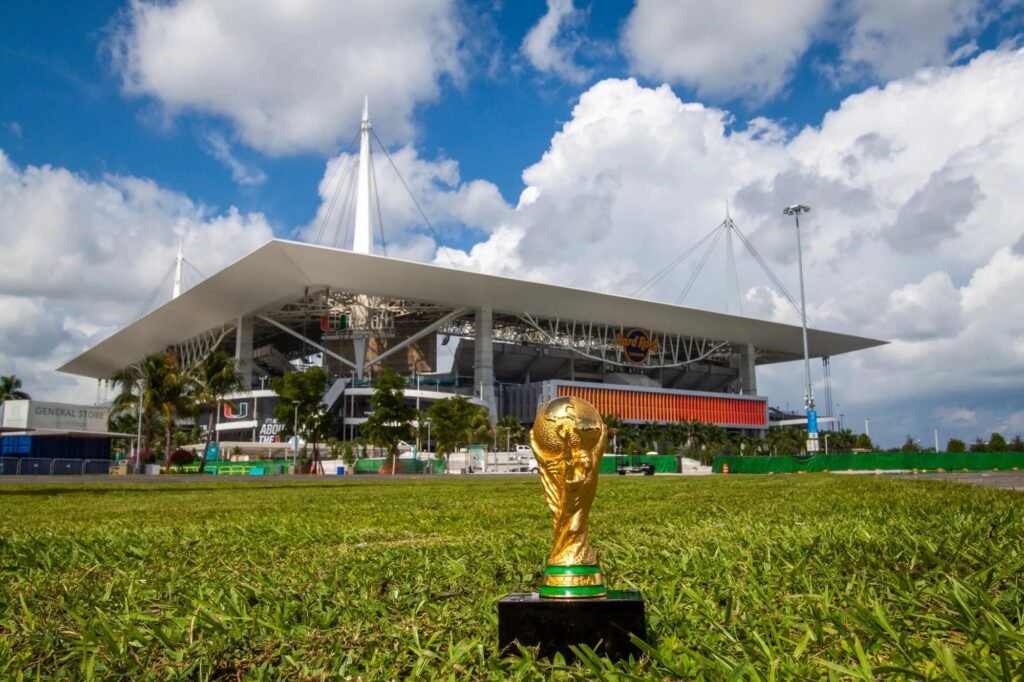
The result has been a noticeable World Cup presence, even several miles away from the games at Hard Rock Stadium.
A Neighborhood Positioned Near the Action
Miami is hosting seven World Cup matches at Hard Rock Stadium, while Downtown Miami has served as another major center of activity through the FIFA Fan Festival at Bayfront Park.
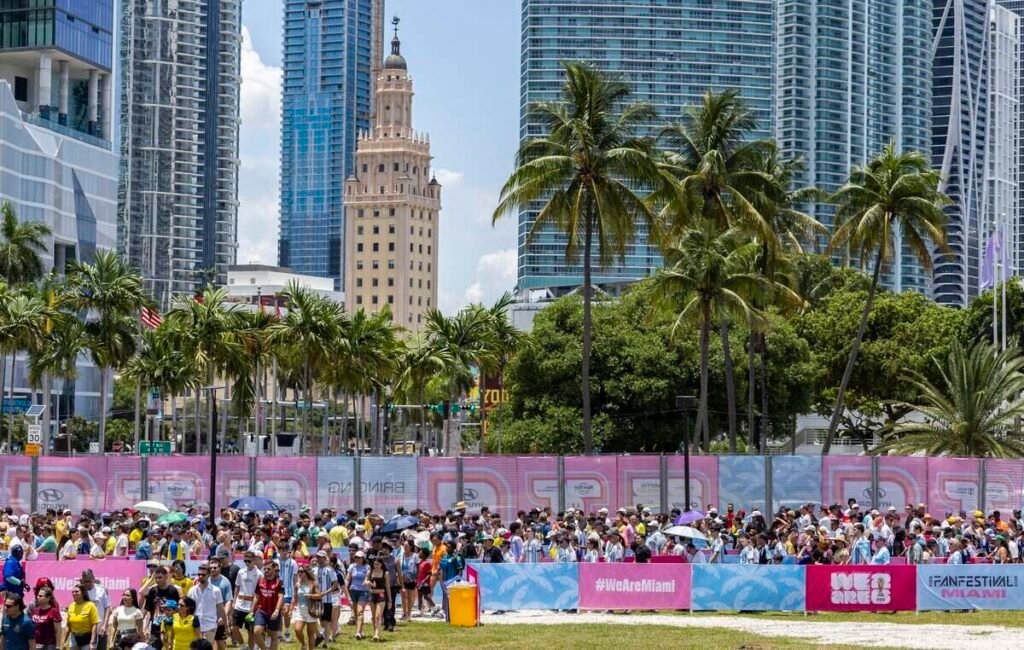
The downtown festival was planned as a 23-day event with large public screenings, entertainment, food, and activities. Miami-Dade County extended Metromover service until midnight throughout the festival, with later service on several high-attendance dates, because thousands of fans were expected to travel into the urban core.
Although Edgewater is not inside the official festival footprint, it is close enough to feel the effects. Residents can reach Downtown by Metromover from the School Board station, while visitors staying in and around Edgewater have access to Biscayne Boulevard, the Venetian Causeway, Wynwood, Midtown, and the broader downtown area.
That proximity has helped bring some of the tournament’s excitement into the neighborhood—but it has also added pressure to streets and services that already manage significant daily congestion.
The Positive Impact: Visitors, Visibility, and Local Spending
The most immediate potential benefit has been increased activity for hotels, short-term rentals, restaurants, cafés, bars, transportation providers, and other businesses serving visitors.
Before the tournament, economic models projected that Miami’s seven matches could generate more than $650 million in direct economic activity, led by hotel stays, food and beverage spending, retail, and transportation.
Miami has also experienced increased travel demand during the tournament, particularly around knockout matches. Reuters reported a surge in vacation-rental bookings in host cities including Miami during the World Cup and July Fourth period.
For Edgewater, that activity can translate into more customers for neighborhood restaurants, coffee shops, convenience stores, beauty and wellness businesses, and other establishments that may otherwise experience a slower summer season.
The tournament has also increased Miami’s international visibility. Visitors who come for a match may stay in neighborhoods outside the stadium area, explore the waterfront, visit Wynwood or the Design District, and discover Edgewater businesses along the way.
Even a modest increase in summer customers can be meaningful for a local business.
The Economic Benefit Has Not Been Equal
At the same time, the promised World Cup boom has not reached every business equally.
Reporting from Miami businesses during the tournament has shown mixed results. Some larger venues and centrally located establishments have benefited from visitors and major games, while smaller businesses have reported only modest increases or normal summer traffic outside of the most popular matches. Local governments invested approximately $53 million in hosting the tournament, adding scrutiny to whether the benefits will ultimately justify the public cost.
Nationally, early employment data has also failed to show the dramatic hospitality-job growth that some World Cup forecasts anticipated. Tourism has clearly generated spending, but the increase has not yet translated into a major, measurable surge in long-term employment. That distinction matters for Edgewater.
A busy table at a restaurant, a full vacation rental, or a crowded watch party is positive. But it does not necessarily mean every neighborhood business is benefiting, or that the tournament’s financial gains will be distributed evenly.
The true economic impact will take time to measure through hotel-tax collections, restaurant sales, employment data, and local business reporting after the tournament ends.
More Traffic in a Neighborhood Already Under Pressure
Traffic is one of the clearest negative impacts associated with an event of this scale.
The most extensive road closures have been concentrated around Hard Rock Stadium in Miami Gardens, where closures and restricted access begin early on match days and continue through the evening.
However, tournament traffic does not remain confined to the stadium area.
Visitors travel between hotels, beaches, Downtown, Bayfront Park, nightlife districts, restaurants, airports, and the stadium. Edgewater sits along several of those routes and already experiences congestion on Biscayne Boulevard, Northeast Second Avenue, the Julia Tuttle Causeway approaches, and neighborhood streets used as alternatives when larger roads slow down.
The World Cup has added another layer to an existing mobility problem: more rideshare vehicles stopping for passengers, increased demand for parking, delivery conflicts, unfamiliar drivers, and heavier movement between Downtown and northern Miami neighborhoods.
Residents may not experience the same disruption every day or during every match. But high-profile games, Fan Festival events, and large downtown gatherings can create concentrated periods of congestion that affect daily routines.
Parking, Rideshares, and Pedestrian Conflicts
Edgewater’s parking supply was limited before the World Cup.
Additional visitors can intensify competition for street parking, especially near restaurants, gathering places, short-term rentals, and buildings hosting private events. Rideshare vehicles may also stop in travel lanes, bike lanes, building entrances, or crosswalks while dropping off and collecting passengers.
These behaviors are not unique to the World Cup, but major events increase their frequency.
The result can be frustrating for drivers and potentially dangerous for pedestrians. When sidewalks, crosswalks, loading zones, and curb space are already under pressure, even a temporary increase in activity reveals how urgently the neighborhood needs better pedestrian infrastructure, clearer loading areas, stronger enforcement, and safer street design.
In that sense, the World Cup has acted as a stress test for Edgewater’s walkability.
It has shown the value of being able to walk safely to a local restaurant, gathering place, park, Baywalk segment, or transit connection instead of relying on a car for every short trip.
Public Transportation Has Received More Attention
One encouraging result has been the increased emphasis on public transportation.
Miami-Dade encouraged fans to use Metrorail, Metrobus, and Metromover to reach the Downtown Fan Festival, with extended operating hours and direct connections to Bayfront Park. The county also created free game-day shuttle service from designated transit hubs to the stadium for verified ticket holders.
For Edgewater residents, the extended Metromover hours offered a practical alternative to driving Downtown. The School Board station gives part of the neighborhood direct access to the system, although many residents still live too far from a station to consider it truly convenient.
The larger lesson is that people will use transit when service is frequent, reliable, clearly communicated, and connected to the places they want to go.
The World Cup has demonstrated what expanded transit service can look like during a major event. The challenge will be ensuring that improvements in mobility do not disappear once the tournament ends.
Noise, Crowds, and Quality of Life
World Cup excitement naturally comes with noise.
Watch parties, celebrations, car horns, music, and post-match gatherings can add a festive atmosphere. They can also create disturbances for residents living above or beside entertainment venues.
For many people, the noise is part of the celebration. For others—particularly families, seniors, people working early hours, and residents with pets—it can become disruptive.
The balance depends heavily on responsible event management, reasonable hours, security, crowd control, and respect for surrounding residential buildings.
Edgewater’s mix of high-rise residences and commercial establishments means that these interests frequently exist side by side. The tournament has once again highlighted the need for thoughtful coexistence between an active neighborhood and the people who call it home.
Safety and Increased Public Activity
Large international events require heightened public-safety planning.
Road restrictions around the stadium were introduced as part of enhanced safety operations, while transit agencies, police departments, event organizers, and local governments have coordinated around crowd movement and transportation.
In Edgewater, increased foot traffic can have a positive effect by creating more activity around local businesses and public spaces. Busy streets and occupied establishments often feel more lively and connected.
However, crowds also require attention to traffic enforcement, pedestrian crossings, intoxicated driving, blocked sidewalks, and emergency access to buildings.
The World Cup has reinforced the importance of having strong communication between residents, businesses, property managers, law enforcement, and public agencies during major events.
A Global Event That Feels Local
Perhaps the most positive effect has been cultural.
Miami is one of the most international cities in the United States, and Edgewater reflects that diversity. During the World Cup, residents who support different countries have been able to celebrate their heritage, meet neighbors, and share an experience that crosses languages, backgrounds, and generations.
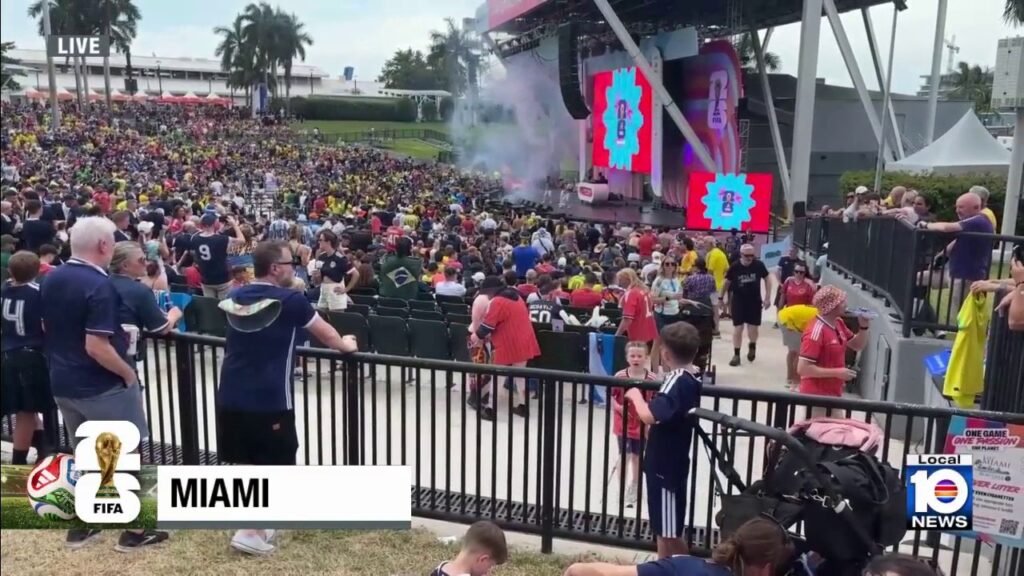
Miami-area watch parties have become an important part of the tournament, with restaurants, bars, parks, and public spaces offering opportunities for people to experience the games together.
A match may last only 90 minutes, but the conversations, celebrations, disappointments, food, flags, and friendly rivalries create something larger. They create community.
Bringing BNA Members Together at Sylvano
Whatever the final economic numbers may show—and regardless of the traffic, crowds, and temporary inconveniences—watch parties have been one of the best ways the World Cup has brought people together.
BNA hosted a World Cup watch party for our members at Sylvano, where neighbors gathered for Brazil versus Scotland, shared food and drinks, and enjoyed an evening filled with energy, laughter, and plenty of opinions about the game.
The event reminded us that community-building does not always need to begin with a formal meeting or a difficult neighborhood issue. Sometimes, it begins with a screen, a goal, a table of food, and a room full of neighbors cheering together. As for who will win the World Cup, we have learned not to make predictions.
Every team we have rooted for has been eliminated—so it may be better for everyone still in the tournament if you do not ask for our opinion.