The Hidden Causes of Flooding in Edgewater
When streets flood in Edgewater, the first instinct is to blame the rain. But rain is only part of the story.
The harder truth is that flooding in neighborhoods like ours is often the result of multiple pressures colliding at once: intense downpours, aging or undersized drainage systems, tidal backflow from Biscayne Bay, rapid urban development, king tides, flash floods, and infrastructure that is struggling to keep pace with the city around it. In other words, many flooding events are not caused by one issue alone. They happen when several vulnerabilities hit at the same time.
That should get everyone’s attention.
Because if flooding were simply the result of an unusually bad storm, the solution would be straightforward. But in Edgewater, the challenge is more layered. Water can rise from the street, push in from the bay, back up through drainage systems, or overwhelm areas that were never designed to handle today’s density and pace of development. The problem is no longer limited to hurricane season. It can happen during a summer downpour, a flash flood event, or even during periods of unusually high tidal activity.
One of the least understood drivers of flooding is what happens during king tides. These seasonal high tides can push seawater backward through outfalls and stormwater systems, causing flooding in streets, low-lying areas, garages, and building access points even when there is little or no rain. That means some of the flooding Miami experiences is not just falling from the sky. It is also rising from the bay and moving through infrastructure that is already under pressure.
Then add construction and density to the equation.
As neighborhoods grow, water has fewer places to go naturally. More pavement, more towers, more disrupted drainage patterns, more debris, and more active work sites can all put added strain on systems that were not built for today’s urban intensity. In some cases, drains may be blocked or flow paths altered. In others, heavy rainfall combines with high tide to create the perfect conditions for localized flooding. Even when the immediate trigger is a storm, the damage is often made worse by long-term infrastructure limitations and poor drainage management.
And then there are flash floods.
These events develop quickly and expose every weak point at once. Streets become impassable. Garages become vulnerable. Entryways, loading areas, and building operations can be disrupted in minutes. In a neighborhood like Edgewater, where so much of daily life depends on mobility, access, and functioning building systems, that kind of disruption is more than an inconvenience. It is a direct operational and financial risk.
So when flooding happens in Edgewater, it is rarely “just weather.” It is usually a combination of pressure points: rainfall, king tides, drainage limitations, density, construction impacts, maintenance gaps, and the speed of response.
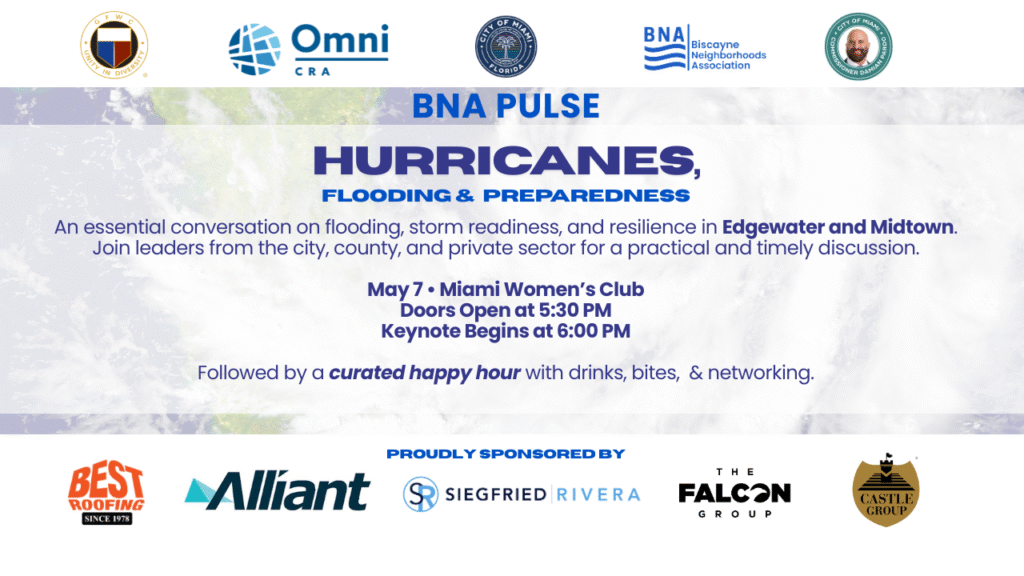
That is why this year’s forum matters. On May 7, BNA Pulse will bring together experts in engineering, property management, legal strategy, roofing, renovation, emergency response, and resiliency to discuss what is driving flooding in neighborhoods like ours, what buildings should be watching for, and what practical steps can reduce risk before storm season intensifies.
REGISTER HERE
Because the better we understand the hidden causes of flooding, including the growing role of king tides, the better prepared we will be when the visible consequences arrive.