If Downtown Floods, What Happens to Edgewater?
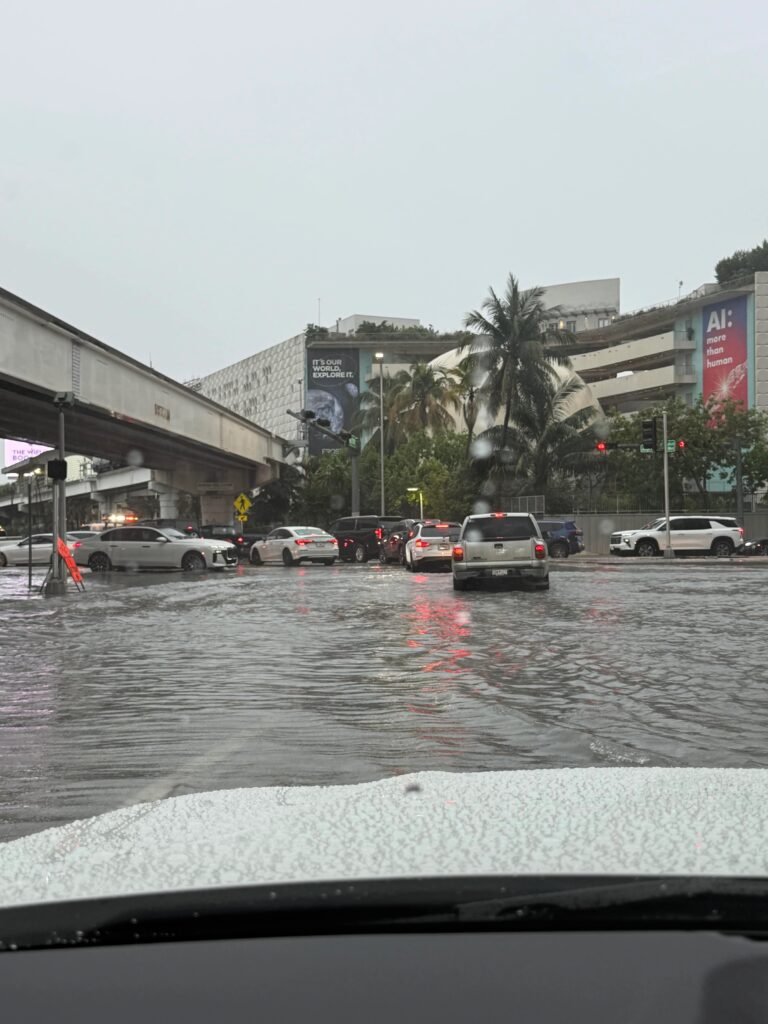
Miami does not need a hurricane to remind us how exposed we are. Sometimes all it takes is a hard afternoon rain.
That reality has been on display near the Adrienne Arsht Center, where flooding around Biscayne Boulevard and the Miami Signature Bridge construction zone has repeatedly disrupted traffic and turned one of the city’s most important corridors into a warning sign. The Signature Bridge is part of the massive Connecting Miami I-395/SR 836/I-95 Design Build Project, a marquee infrastructure effort that FDOT says is now expected to be completed in late 2029. Recent reporting has also highlighted mounting delays, safety incidents, and litigation tied to the project.
That should concern every building, board, and resident in Edgewater and Midtown.
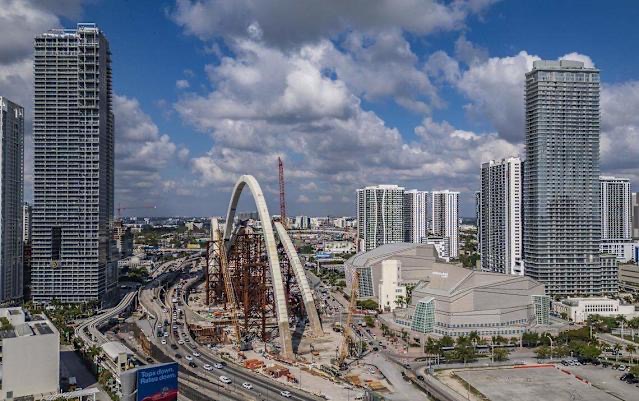
Because if a flagship public works project in the heart of Downtown Miami can become associated with flooding, congestion, and repeated disruption, then no one should assume our surrounding neighborhoods are somehow insulated. When water backs up near Biscayne Boulevard, the problem does not remain neatly contained at one intersection. It spills into traffic patterns, access routes, service operations, and the daily functioning of adjacent residential areas. What happens downtown does not stay downtown. It moves outward, and it moves fast.
And this is not theoretical. Edgewater has already been dealing with its own flooding episodes. In September 2025, Local 10 reported that heavy rain once again left streets in Edgewater under water, with residents describing the problem as familiar after repeated downpours. In separate coverage that same week, city crews were shown deploying pumps in Edgewater as water rose quickly near Biscayne Bay. CBS Miami similarly reported that residents were frustrated as flooding returned yet again.
The pattern is becoming difficult to ignore. Flooding in Miami is no longer only about a named storm approaching from the Atlantic. It is increasingly the result of overlapping pressures: intense rain, low lying streets, constrained drainage, active construction zones, tidal influence, and infrastructure systems that are being asked to handle more than they were designed for. The City of Miami notes that king tides can cause flooding even without rain, and Miami Dade County’s sea level rise strategy openly acknowledges that the community must adapt to “more water.” In Edgewater itself, the City has an active flood improvement project involving new and upsized stormwater pipes, inlets, roadway improvements, and a pump station, which says a great deal on its own.
That is why the flooding around the Arsht Center and the Signature Bridge matters so much. It is visible. It is local. It is expensive. And it exposes a dangerous misconception that many urban neighborhoods still hold, which is that flooding is a future issue or a once a year inconvenience. It is not. It is already interrupting roads, straining infrastructure, and testing how quickly Miami can respond when water overwhelms the system. The National Weather Service this week issued a Flood Watch for Metropolitan Miami Dade during another round of heavy rain, underscoring how quickly conditions can shift in the urban core.
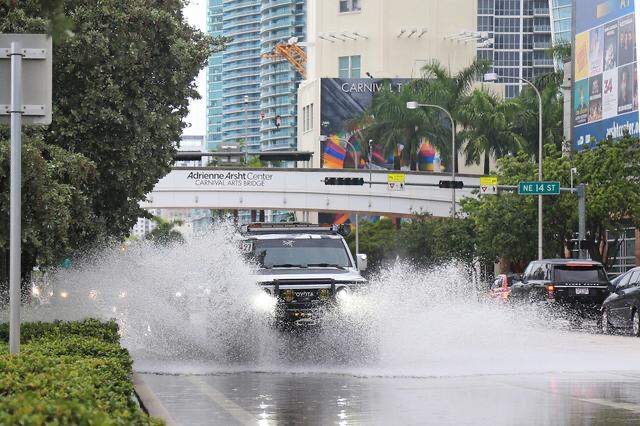
For buildings in Edgewater and Midtown, the real question is not whether a dramatic weather headline will one day appear. The question is simpler and more immediate. If the roads around us flood, if access is disrupted, if drains back up, if garages take on water, if entrances become vulnerable, if residents cannot get in or out safely, are we truly ready?
That is the conversation we need to have now, before storm season intensifies.
On May 7, the BNA Pulse forum will bring together experts in engineering, property management, legal strategy, roofing, renovation, emergency response, and resiliency to examine what flooding and storm risk mean for our buildings and our neighborhood. This is not just a conversation about hurricanes. It is a conversation about infrastructure, accountability, response, and the practical decisions that matter when the water arrives faster than expected.
Because when Downtown floods, it is not someone else’s problem. It is a preview.