Florida Condo Law Updates: What Miami Associations Need to Know
Florida’s condominium landscape has undergone one of the most significant transformations in recent years. With the passage of new legislation—including updates under House Bill 913 (HB 913)—condo associations, board members, and residents across Miami are now facing new requirements that directly impact governance, financial planning, and long-term building safety.
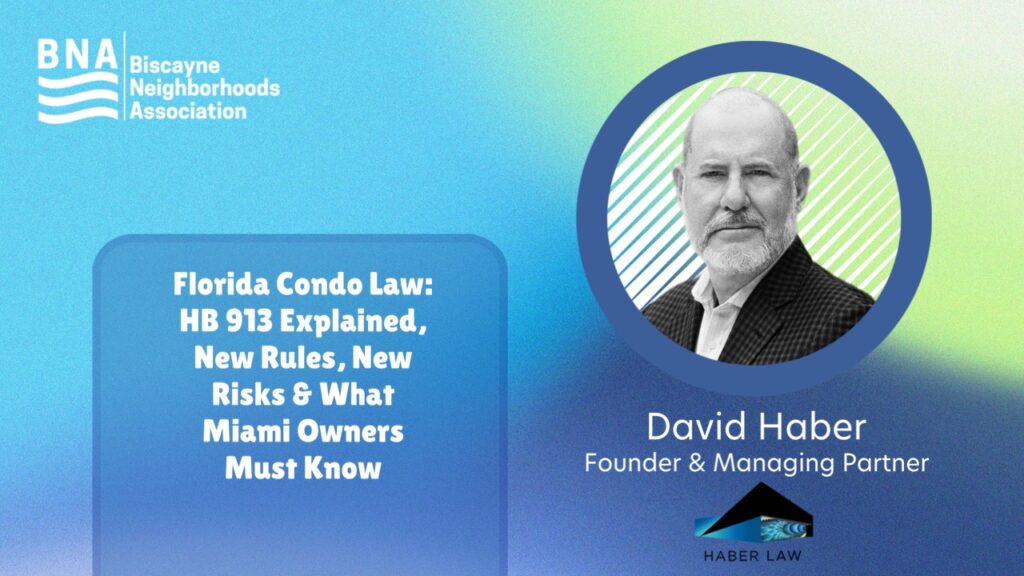
To help break down these changes, the Biscayne Neighborhoods Association (BNA) sat down with David Haber, Founder and Managing Partner of Haber Law, for a detailed conversation on what these updates mean for our community.
🎙️ Watch the full podcast episode HERE
A New Era for Condo Governance
The latest legislative updates represent a continued effort by the State of Florida to improve transparency, accountability, and structural safety within condominium communities. While many of these changes build upon previous reforms, they introduce new expectations for how associations operate and communicate with residents.
For boards and property managers, this means a shift toward more proactive governance—with increased oversight, clearer reporting obligations, and a stronger emphasis on long-term planning.
Key Changes Associations Should Understand
During the conversation, David Haber outlined several critical areas that condo associations should prioritize:
1. Increased Transparency & Reporting Requirements
Associations are now required to provide more detailed and timely information to state regulators and residents. This includes updates on building conditions, governance structures, and financial health—ensuring that unit owners have a clearer understanding of how their building is being managed.
2. Structural Integrity & Inspection Requirements
The focus on milestone inspections and Structural Integrity Reserve Studies (SIRS) continues to play a central role. These requirements are designed to ensure buildings are properly assessed and financially prepared for major repairs, reinforcing long-term safety and resilience.
3. Evolving Governance Practices
New provisions around electronic voting and virtual meetings aim to increase participation and modernize how associations operate. These changes make it easier for residents to engage in decision-making processes, even when they cannot be physically present.
4. Greater Accountability for Boards and Management
With increased oversight comes increased responsibility. Associations that fail to comply with new requirements may face legal and financial consequences, making it essential for boards to stay informed and aligned with current regulations.
What This Means for Residents
For condo owners, these changes may translate into greater transparency, increased engagement opportunities, and potentially higher financial obligations as buildings address structural needs and reserve funding.
While some measures may feel burdensome in the short term, the broader goal is to ensure safer, more financially stable communities across South Florida.
A More Complex—but Necessary—Future
As discussed in the podcast, Florida condo law will continue to evolve. Between aging infrastructure, climate-related risks, and financial pressures, the regulatory environment remains dynamic.
David Haber emphasized that the most successful associations moving forward will be those that adopt a proactive, informed, and strategic approach—working closely with legal, engineering, and financial professionals to navigate the complexities ahead.
Stay Informed, Stay Engaged
At the Biscayne Neighborhoods Association, our mission is to provide residents and community leaders with the tools and information they need to make informed decisions.
Understanding these legislative changes is not just about compliance—it’s about protecting your investment, your building, and your community.
🔗 Learn more about Haber Law: https://www.haber.law